Cost to Fix a Hole in a Drywall Ceiling
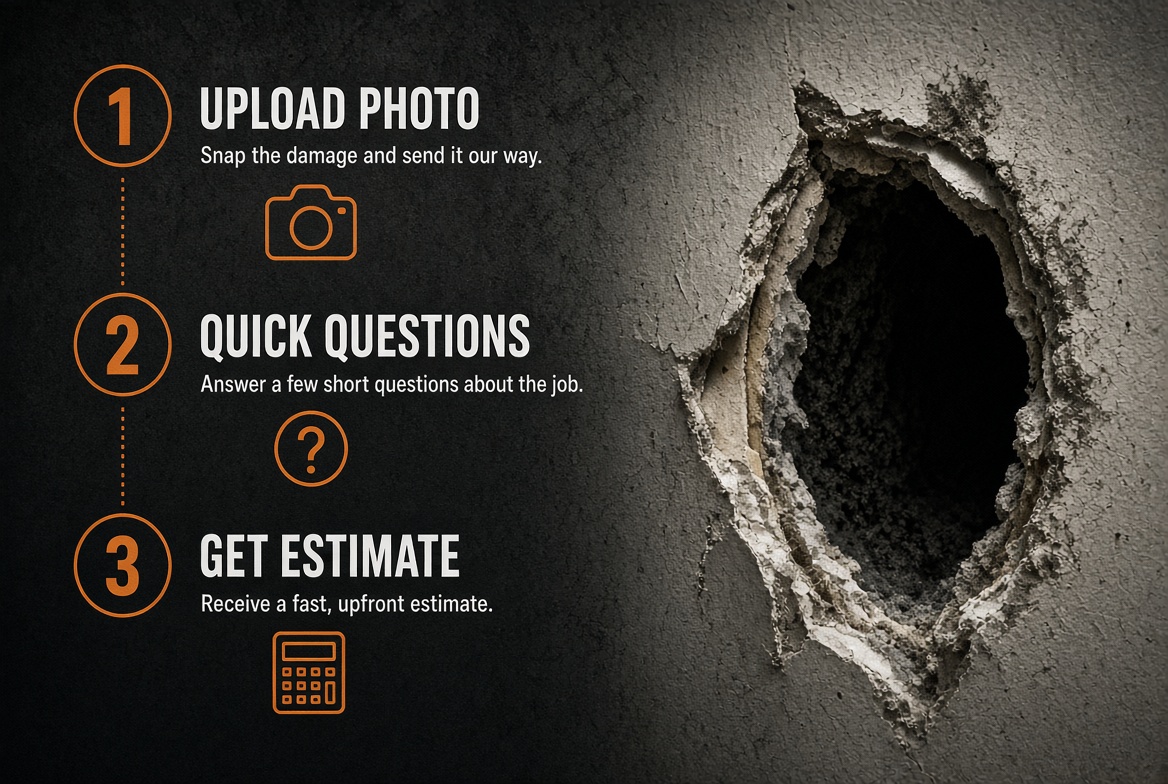
A hole in a drywall ceiling usually costs more to fix than the same hole in a wall. The patch itself is the same idea, but every step happens overhead, on a ladder, with dust falling on you and the room below. Here's what published pricing guides say a ceiling hole costs, what pushes the price up or down, and how DIY compares.
Ceiling hole repair cost: quick answer
- Published ranges for a ceiling hole run about $100 to $600. Fixr's ceiling repair guide puts hole repair in a ceiling at $100–$600, depending on size and material.
- Broader "ceiling repair" numbers run higher. Angi and HomeAdvisor list drywall ceiling repair at $220–$1,300, but that range covers all kinds of ceiling work, not just holes.
- Ceilings carry a premium over walls. FindFixCall estimates ceiling drywall work at roughly 30–60% more than the same size repair on a wall.
- Texture is a big swing factor. A smooth ceiling is the cheapest to patch; popcorn or heavy texture costs more to blend.
- One visit is the norm with the right tools. WhatAHole techs heat-dry each coat, and about 90% of hole repairs are finished in one visit.
Ceiling hole cost by size
These bands come from the published guides linked above. Treat them as planning ranges, not a quote for your ceiling.
| Ceiling hole | What the repair usually involves | Published range |
|---|---|---|
| Small (screw, anchor, or light-fixture hole under ~2") | Fill, sand, prime, touch up | Low end of Fixr's $100–$600 ceiling hole range |
| Medium (~2–6", like a fixture or speaker cutout) | Mesh or California patch, several coats | Mid part of Fixr's $100–$600 range |
| Large (over ~6", or a foot or tool through the ceiling) | Cut out square, add backing, screw in a new piece, tape and finish | Upper part of Fixr's range; FindFixCall lists ceiling patches at $300–$600 for smooth or light texture |
| Any size in popcorn or heavy texture | Patch plus texture blending | FindFixCall lists $400–$900 |
For comparison, our drywall hole repair cost guide covers wall holes by size. Ceiling pricing usually sits above those wall bands for the same size hole.
Why a ceiling hole costs more than a wall hole
Working overhead is slower. Compound has to go on thin so it doesn't sag or drop, and every pass of the knife or sanding sponge happens with arms raised on a ladder.
Setup and cleanup take longer. Sanding dust falls straight down onto floors and furniture, so the room needs drop cloths, and sometimes furniture moved, before any work starts.
The patch needs solid backing. A ceiling patch hangs upside down, so a large one has to be screwed to backer boards or framing. It can't rely on mesh alone.
Ceiling board can be heavier. Ceilings are often hung with 5/8-inch board, and a new piece has to match the existing thickness to sit flush.
Texture is harder to hide. Smooth ceilings patch cleanly. Popcorn, knockdown, and other textures take extra work to blend, and a ceiling patch is in plain view under lights.
High or vaulted ceilings need more equipment. HomeAdvisor notes that tall and vaulted ceilings cost more because they need special tools and access.
Labor rates still apply. Angi lists typical drywall pros at $60–$90 per hour, so a job that takes longer overhead costs more even when the hole is small.
DIY ceiling hole repair: what it really takes
The materials for a ceiling hole are the same as for a wall: spackle or joint compound, a mesh patch or scrap drywall, tape, knives, a sanding sponge, primer, and ceiling paint. For a large hole, add backer strips and drywall screws. The large hole patch guide walks through the cut-in method step by step, and it works the same way overhead.
What changes on a ceiling is the effort:
- You need a stable ladder or work platform and someone to steady it.
- Holding a patch overhead while you screw it in is much easier with a second person.
- Thin coats are a must. Thick compound overhead sags and cracks as it dries.
- Ceiling paint rarely touches up invisibly. Many DIYers end up rolling the whole ceiling to hide the patch.
- Dry time adds up. With premixed compound, a DIY patch usually stretches across more than one day. Our repair time guide breaks down work time versus dry time.
DIY makes sense for a small, smooth-ceiling hole in a low-traffic room when you're comfortable on a ladder. For anything larger, textured, or over a staircase or high ceiling, a pro price is worth getting first.
Safety checks before you touch a ceiling hole
- Look inside with a flashlight. Ceilings hide wiring, light fixture boxes, ducts, and pipes. Don't cut blind.
- Turn off power at the breaker if the hole is near a light, fan, or junction box.
- Older ceiling? Test before you sand. The EPA says you can't tell whether drywall or compound contains asbestos without testing. Popcorn ceilings in older homes are a common concern, so have the material tested before cutting or sanding.
- Wear eye protection and a dust mask. Overhead sanding sends dust straight down at your face.
How to keep a ceiling hole repair affordable
- Bundle holes into one visit. Old anchor holes, a fixture cutout, and a wall hole in the next room usually cost less fixed together than booked one at a time.
- Clear the room first. Less furniture to move and cover means less setup time.
- Send a clear photo. A well-lit shot with a tape measure in frame helps any estimator price the job accurately. Our photo estimate tips show how.
- Ask what's included. Confirm whether the price covers primer and paint, or just a paint-ready patch.
WhatAHole heat-dries each coat of compound, so ceiling holes don't sit overnight between layers, and about 90% of hole repairs are done in one visit. Upload a photo of your ceiling hole at WhatAHole to see a price before you decide.
FAQ
How much does it cost to fix a hole in a drywall ceiling?
Published guides put a ceiling hole repair at about $100 to $600, depending on the hole's size, the ceiling's texture, and how hard it is to reach. Broader ceiling repair ranges run higher because they include more than holes.
Why does a ceiling hole cost more than a wall hole?
Overhead work is slower, the room needs more protection from dust, larger patches need solid backing, and texture is harder to blend. Guides estimate ceiling drywall work at roughly 30–60% more than the same repair on a wall.
Can I patch a hole in my ceiling myself?
Yes, for small holes on a smooth ceiling if you're comfortable on a ladder. Larger holes, textured ceilings, and high ceilings are harder to make invisible and are where most people hire it out.
Does a ceiling patch need to be painted?
Yes. Raw compound looks different from painted ceiling, so the patch needs primer and paint. Ceiling paint often doesn't touch up cleanly, so you may need to roll the whole ceiling.
Does popcorn texture make a ceiling hole cost more?
Usually, yes. FindFixCall lists popcorn or heavy-texture ceiling patches at $400–$900, versus $300–$600 for smooth or light texture. In older homes, test popcorn for asbestos before anyone sands or cuts it.
Can a ceiling hole be fixed in one visit?
Usually. Compound has to dry between coats, but WhatAHole techs dry each coat with a heat gun, so about 90% of hole repairs are finished in a single visit.
Sources
Price ranges come from Fixr, Angi, HomeAdvisor, and FindFixCall. Prices vary by company and region, so confirm with an estimate for your own ceiling.